

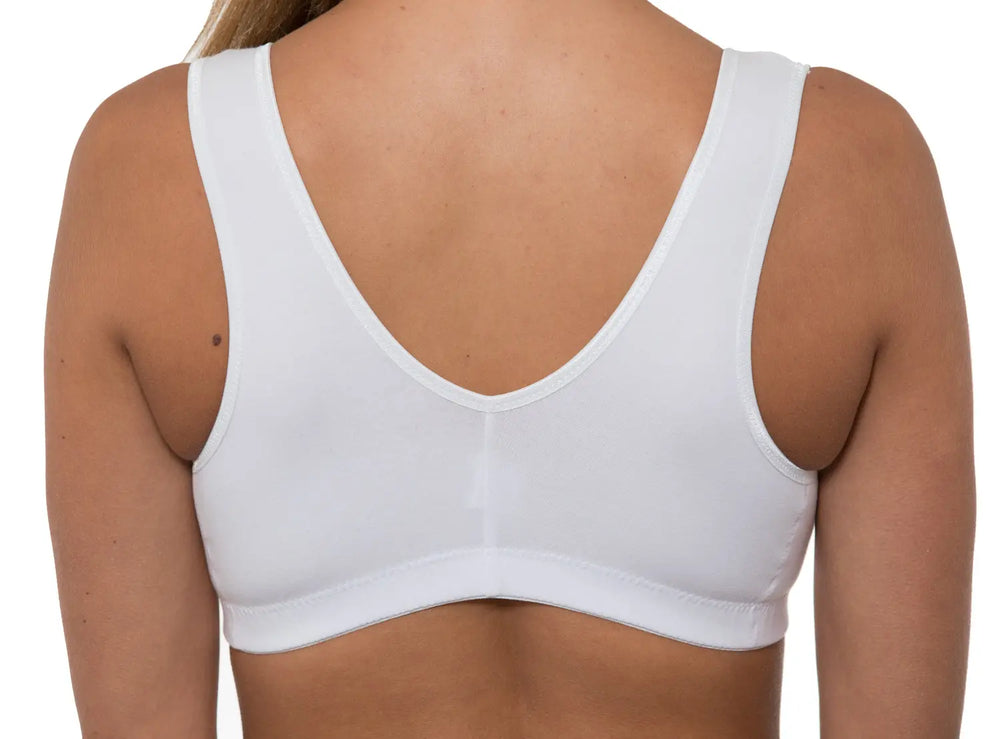
How to Measure for a Mastectomy Bra: A Step-by-Step UK Guide
Quick answer: to measure for a mastectomy bra, take your usual band and cup measurement first, then check the pocket depth against your actual prosthesis or breast form — not just the cup size on the label. Test the fit sitting, standing and reaching before you commit, since a mastectomy bra needs to hold its shape through movement, not just look right in the mirror.
Why Measuring for a Mastectomy Bra Is Different
Finding the right fit after breast surgery isn't the same task as an ordinary bra fitting, and treating it that way is where most of the frustration starts. Your band and cup measurement still matter, but they're only the starting point. What makes or breaks a mastectomy bra is the pocket — whether it holds your prosthesis securely and comfortably through a full day of sitting, standing, reaching and moving, without shifting, gaping or digging in.
Swelling, scar tissue, and changes through recovery all mean your size can shift more than you'd expect, sometimes more than once in the weeks and months after surgery. Getting the measuring right — and knowing what to check for beyond the tape measure — makes a real difference to comfort and confidence.
Before You Start: When to Measure
If you're newly post-surgery, most surgical teams recommend waiting until swelling has settled before being measured for a permanent mastectomy bra, so ask your surgeon or breast care nurse when it's right for you. In the meantime, a soft, wire-free bra without a fitted pocket is usually the safest choice. Once you're ready to measure properly, do it wearing a soft, non-padded bra or no bra at all, standing normally, with a soft tape measure to hand.
Step 1: Measure Your Band Size
Wrap the tape measure snugly under your bust, where the band of your bra would sit. Keep it level and parallel to the floor all the way round. It should feel firm without restricting your breathing. Round to the nearest even number — UK band sizes run 30, 32, 34, 36 and up to 46.
Step 2: Measure Your Cup Size
If you've had a unilateral mastectomy, measure across the fullest part of your remaining breast, then use that measurement for both sides — most mastectomy bras are designed with independent pockets, so the cup size doesn't need to match your prosthesis exactly, just your body. If you've had a bilateral mastectomy, your band size is really the only figure that matters; you can choose your cup and prosthesis size based on the look and support you want, since there's no remaining breast tissue to measure against.
Step 3: Check the Pocket Depth Against Your Prosthesis
This is the step most general bra-fitting guides skip entirely, and it's the one that matters most for a mastectomy bra specifically. Pocket depth needs to match the size and shape of your prosthesis or breast form — too shallow, and the top edge shows or shifts; too deep, and the form sits low and looks unnatural. Fit the bra with the actual prosthesis you plan to wear, not empty, since an empty pocket will always look and feel different once it's filled. If you use different forms for different occasions — a lighter one for everyday, a fuller one for evening wear — check the pocket against each one where possible, as depth needs can vary between them.
Step 4: Test the Fit Sitting, Standing and Reaching
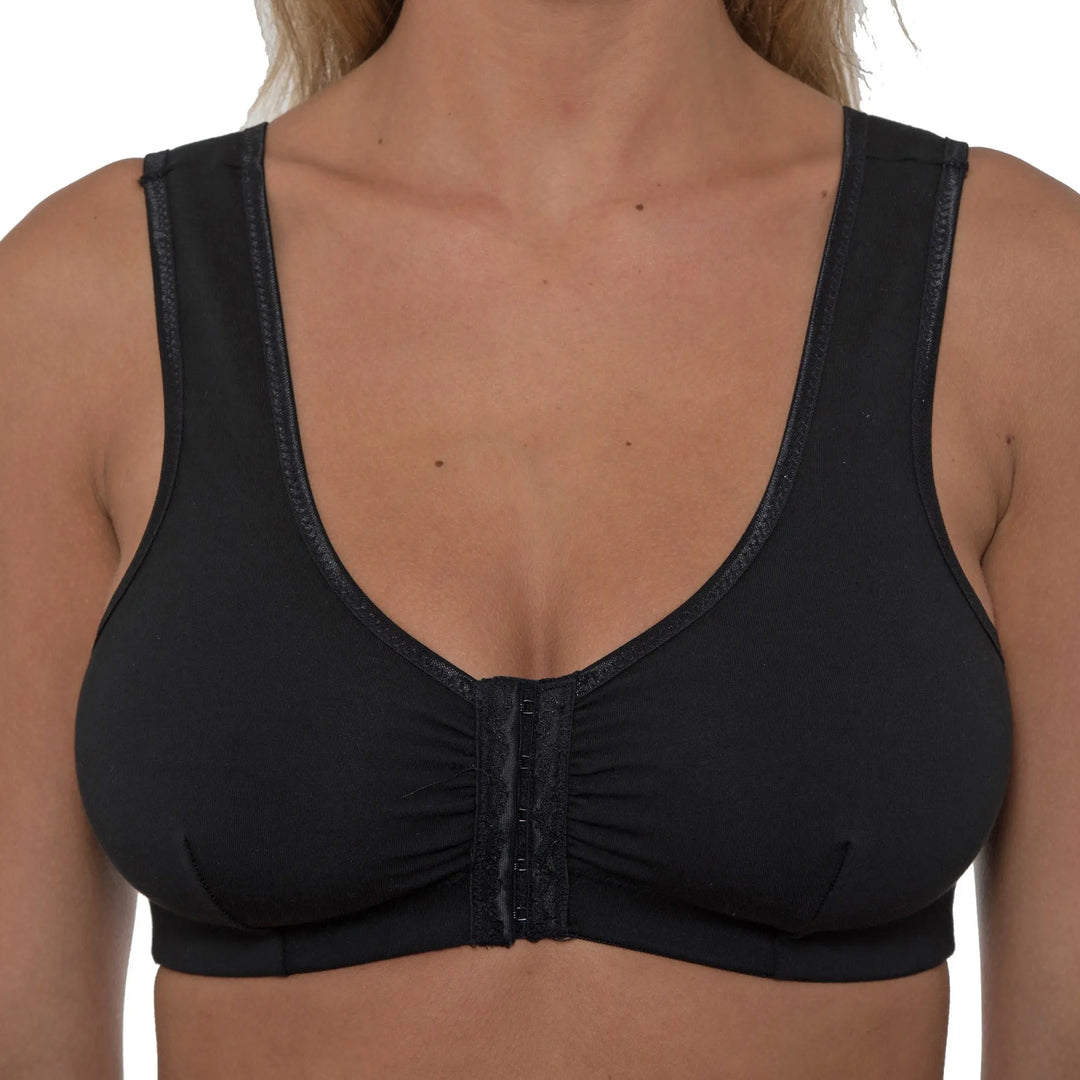
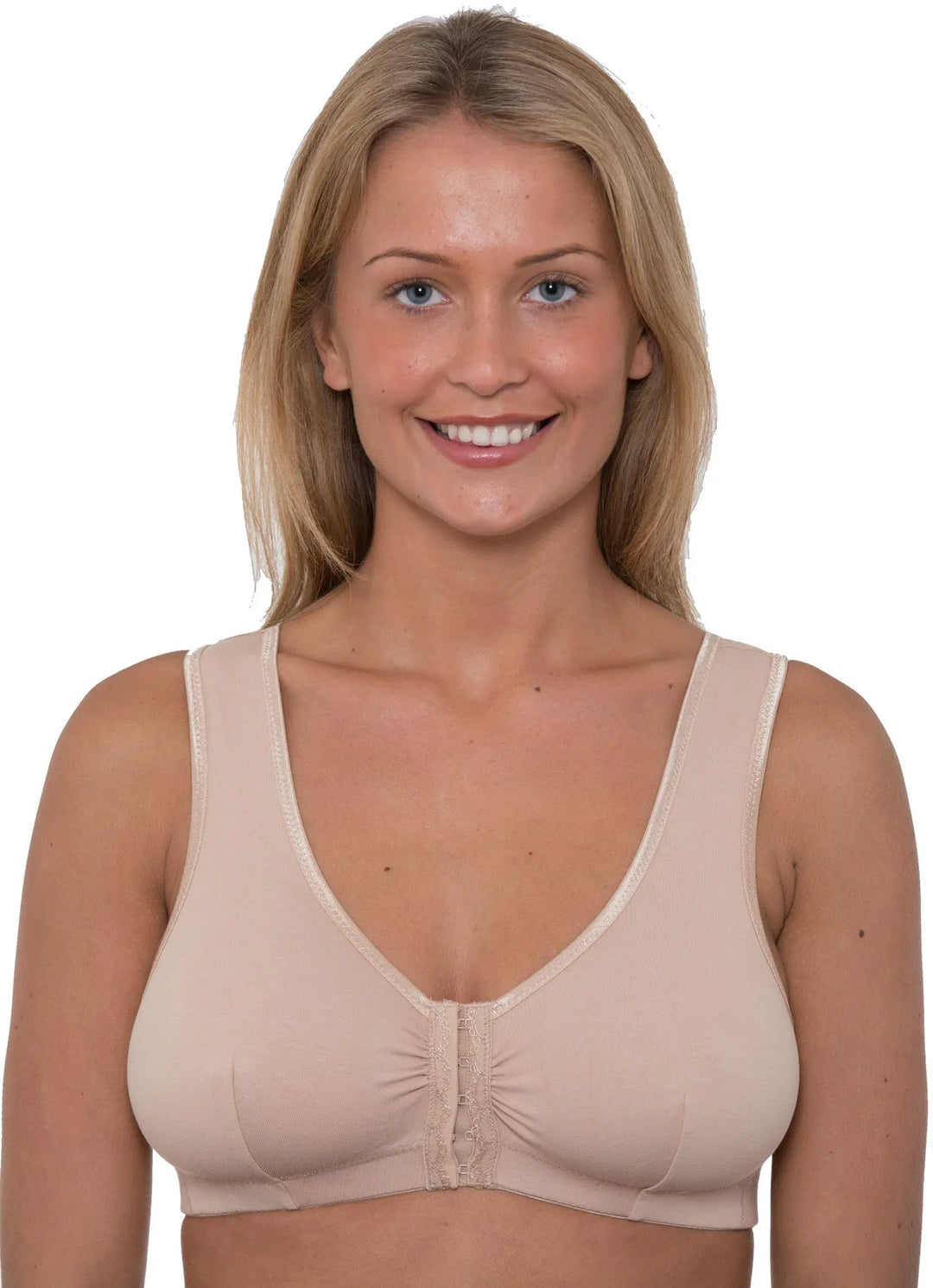
A mastectomy bra that looks right standing still in a mirror can behave completely differently once you move. Sit down and check the band doesn't ride up. Reach your arms overhead and across your body to check the pocket holds the prosthesis in place rather than letting it shift or peek out at the top. Bend forward slightly, as you would tying a shoe, to check nothing gapes. These simple checks catch the majority of fit problems that a static measurement alone won't reveal.
Signs Your Mastectomy Bra Doesn't Fit Right
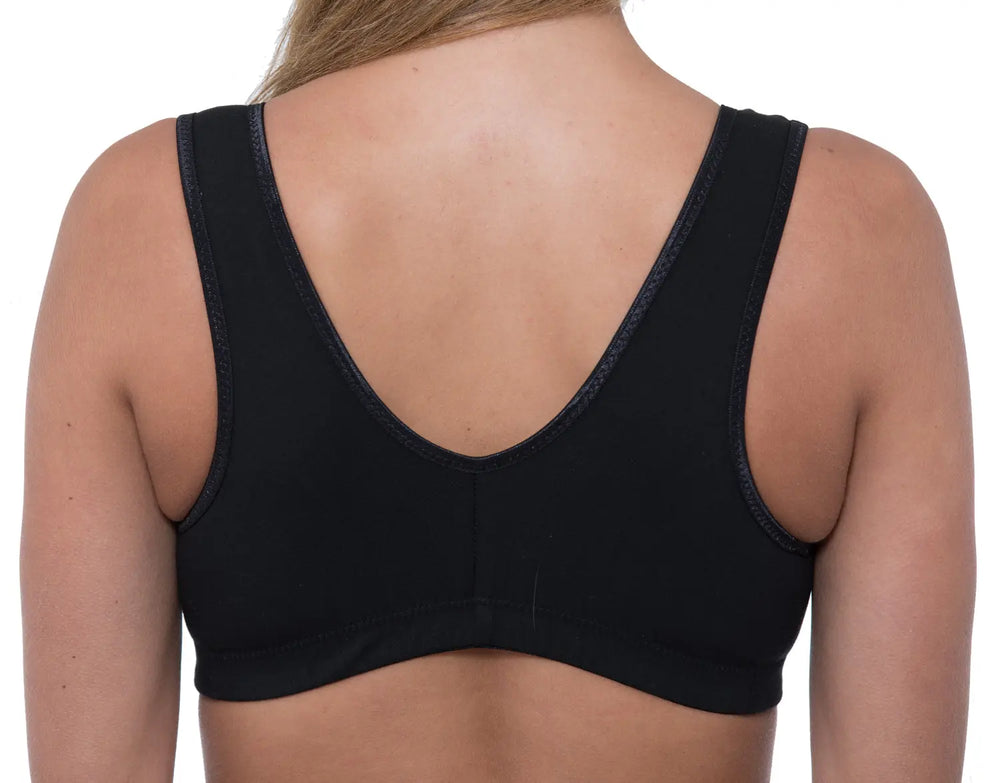
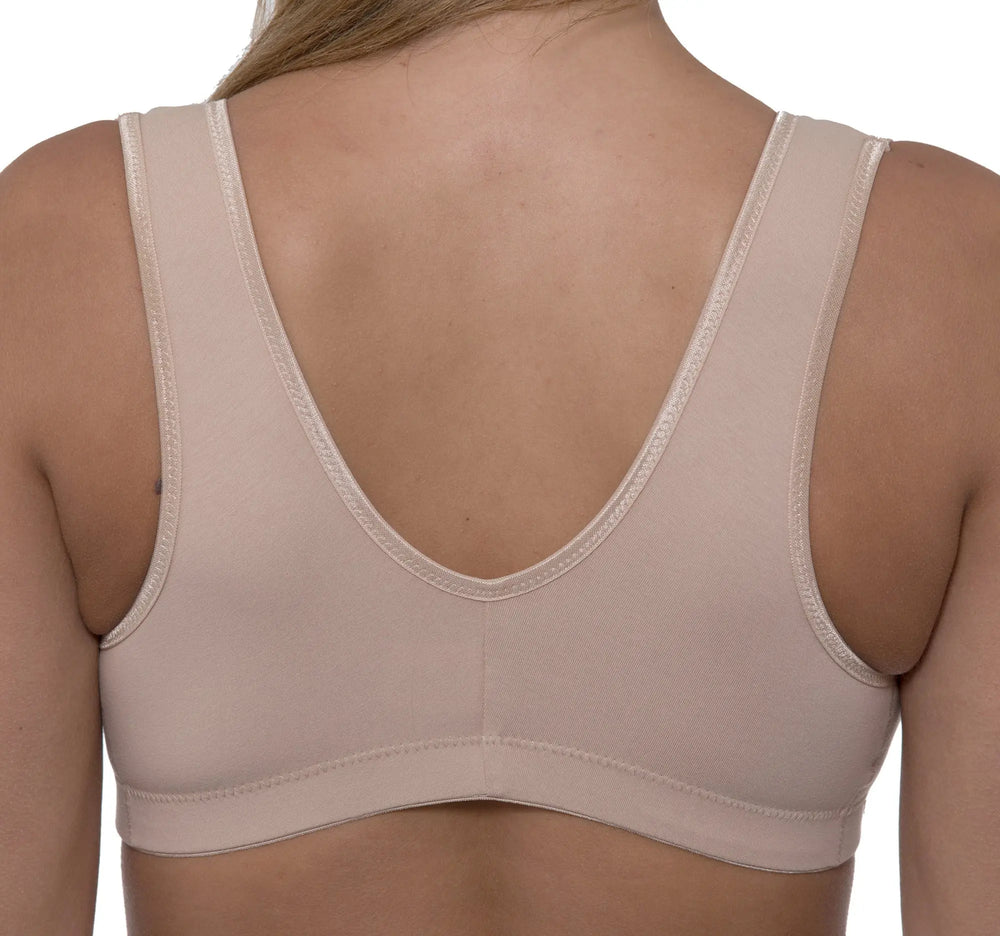
A few signs to watch for once you're wearing it day to day: straps that dig in or slip down usually mean the band is doing too little of the work. A pocket that shifts, gapes or lets the prosthesis peek out at the top means the depth or shape isn't quite right for your form. A band that rides up at the back is almost always sized too loose. None of these are things to just live with — they're all fixable with a different size, depth or style.
If Your Size Keeps Changing
It's genuinely common for mastectomy bra size to shift more than once during recovery — through swelling changes in the early weeks, and again if you're going through tissue expansion ahead of reconstruction. If this applies to you, it's worth remeasuring every few weeks rather than assuming your first fitting is final, and choosing styles with a bit of adjustability (multiple hook rows, adjustable straps) so small changes don't mean buying an entirely new bra each time.
Measuring for a Bilateral or Asymmetrical Fit
If your surgery wasn't symmetrical — a mastectomy on one side with breast-conserving surgery or reconstruction on the other — measure and fit each side independently. Most mastectomy bras are built with this in mind, using separate pockets that can be adjusted or filled differently on each side, so don't feel you need to compromise the fit on one side to accommodate the other.
Frequently Asked Questions
How do I measure myself for a mastectomy bra at home?
Measure your band snugly under your bust and your cup across the fullest part of your remaining breast tissue, then fit the bra with your actual prosthesis in place to check the pocket depth. Test the fit sitting, standing and reaching before deciding it's right, since movement reveals fit issues a mirror check won't.
What's the difference between measuring for a mastectomy bra and a regular bra?
Band and cup measurement work the same way. The difference is the pocket: it needs to be checked against your actual breast form or prosthesis, not just against a cup size on a label, since pocket depth and shape affect fit far more than they do in an ordinary bra.
How soon after surgery can I be measured for a mastectomy bra?
This varies by individual, so it's best confirmed with your surgeon or breast care nurse — swelling generally needs to settle first. In the meantime, a soft, wire-free bra without a fitted pocket is usually the more comfortable option.
Why does my mastectomy bra prosthesis keep shifting?
This is usually a pocket depth or shape mismatch rather than a band or cup problem. Try fitting the bra with your prosthesis in place and testing it through movement — reaching, bending and sitting — rather than relying on how it looks standing still.
Do I need a different bra size for each breast form I own?
Not necessarily the band or cup size, but pocket depth can vary between lighter everyday forms and fuller occasion forms. It's worth checking the fit with each form you plan to wear regularly.
Shop Mastectomy Bras
Orchid Fashion Boutique stocks mastectomy and post-surgery bras with pocketed, front-fastening and seam-free options, in sizes up to 46J. If you're still working out your band and cup measurement from scratch, our full bra fitting guide covers that in more detail. Free UK delivery and a 30-day no-quibble returns policy mean you can try a size at home without risk. Browse our mastectomy bras.