

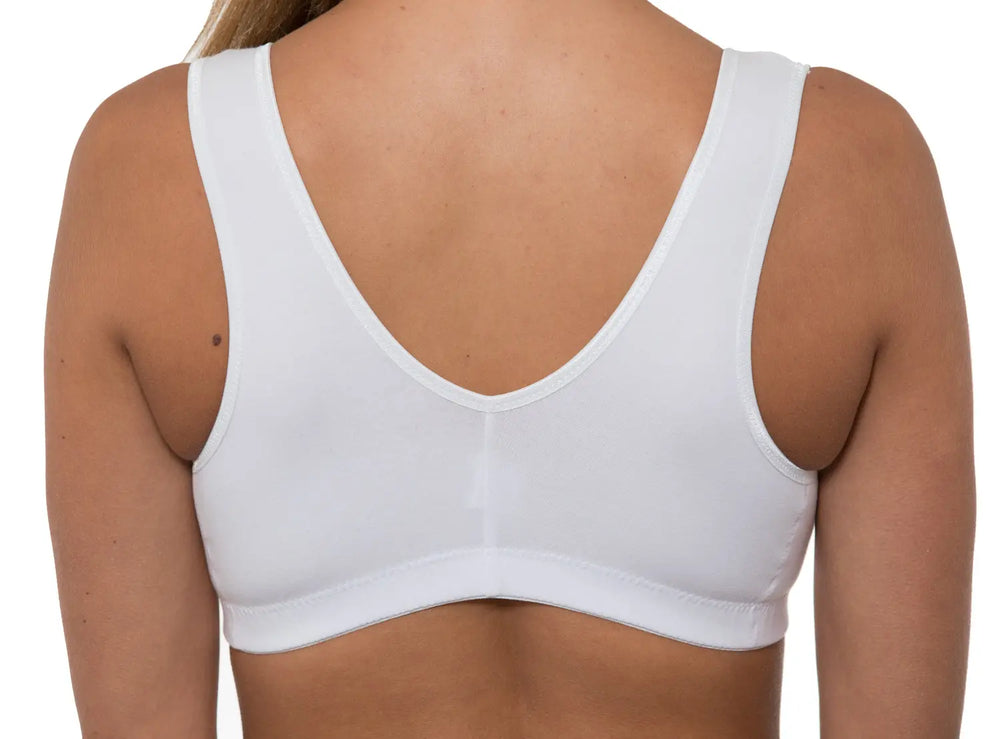
Bilateral Mastectomy Bras: What to Look for and How to Get the Right Fit
After a bilateral mastectomy — the surgical removal of both breasts — the relationship with lingerie changes in ways that most bra fitting advice simply doesn't account for. The guidance written for women shopping after a unilateral (single-side) mastectomy doesn't fully apply. The general bra fitting guides aimed at women who haven't had surgery don't apply at all.
This guide is specifically for bilateral mastectomy: what makes a bra work in this situation, how fitting differs, and what to expect as your needs evolve through recovery and beyond.
How Bilateral Mastectomy Changes Bra Fitting
After unilateral mastectomy, bra fitting is partly about matching the remaining breast — finding a cup that supports the natural side and holds a prosthesis on the surgery side so the silhouette is balanced. After bilateral mastectomy, that reference point is gone. The fit is no longer about matching; it's about creating a supported, comfortable, balanced shape from scratch.
This has some practical implications:
Both cups need pockets
A bra designed for unilateral mastectomy sometimes has a pocket on one side only, or has asymmetric cup construction. For bilateral mastectomy you need bilateral (both-side) pockets — one for each side. Check this specifically when buying: the product description should say bilateral, dual or both-side pockets. Single-pocket mastectomy bras are not suitable.
Balance is built in, not fitted around
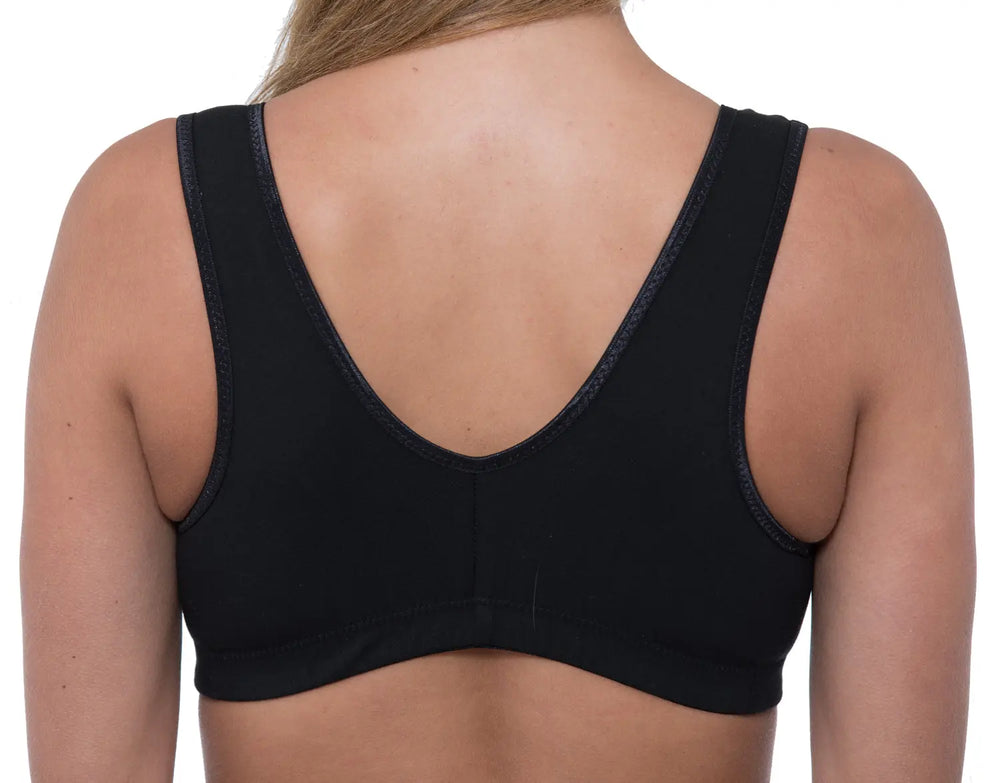
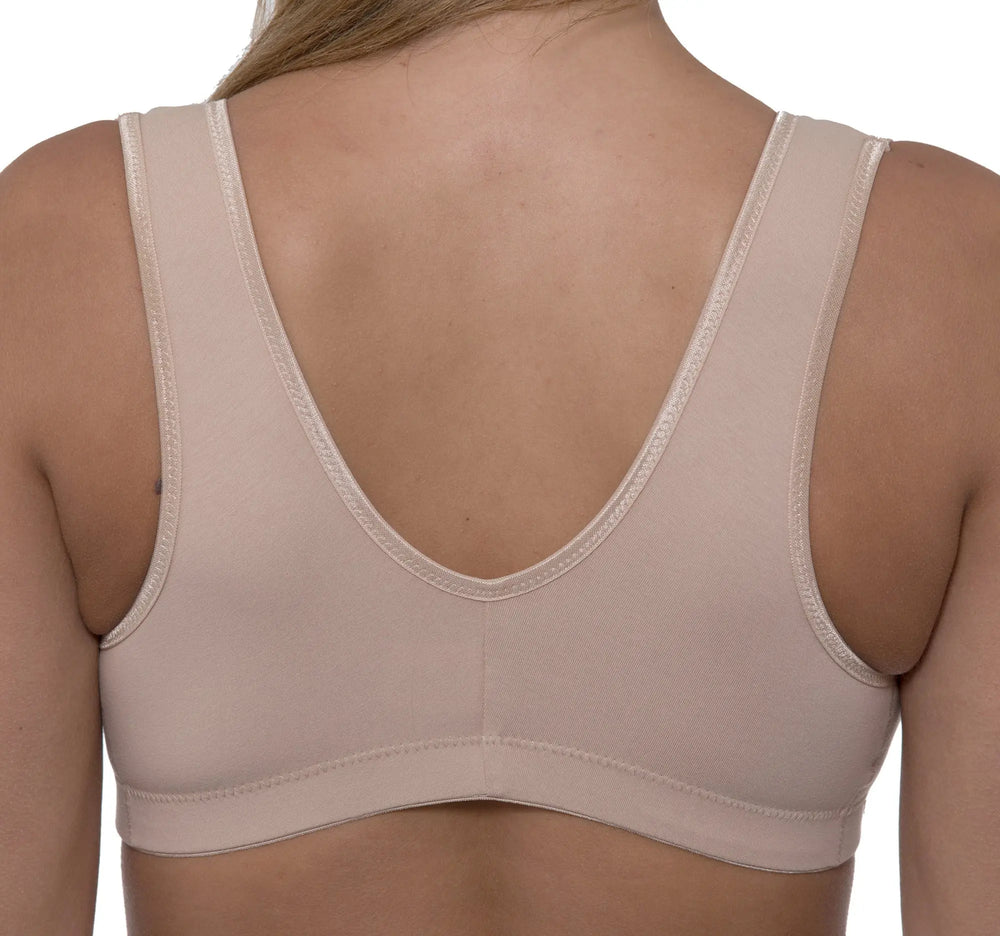
With both breast forms sitting in the cups, the weight is symmetrical from the start. This means the bra's underband and strap construction does equal work on both sides, which can actually be more comfortable than a unilateral setup where one side carries natural breast tissue and the other carries a prosthesis. The back band needs to be firm and even — any tendency to ride up on one side is a sign the band is too loose or not deep enough.
Chest wall sensitivity
Without breast tissue acting as a cushion, the bra sits closer to the chest wall and any stiff seaming, rigid construction or underwire is felt more directly. This is why virtually all post-bilateral-mastectomy bras are non-wired and have a smooth, soft inner lining. Some women find that even the inner seams of cups cause friction at scar sites — in that case, a seamless or minimally seamed cup lining is worth prioritising.
You may not need padding in the cups
If you're wearing bilateral breast forms, you don't need padded cups — the forms provide the shape. Lightly padded or non-padded cups are typically better because they don't add unnecessary bulk around the forms and allow the prosthesis to sit naturally in the pocket.
Choosing Your First Bra After Bilateral Mastectomy
In the first weeks post-surgery, the priority is purely comfort and protection of healing tissue. At this stage:
- Choose a soft-cup, wire-free style with no rigid structure near the chest wall
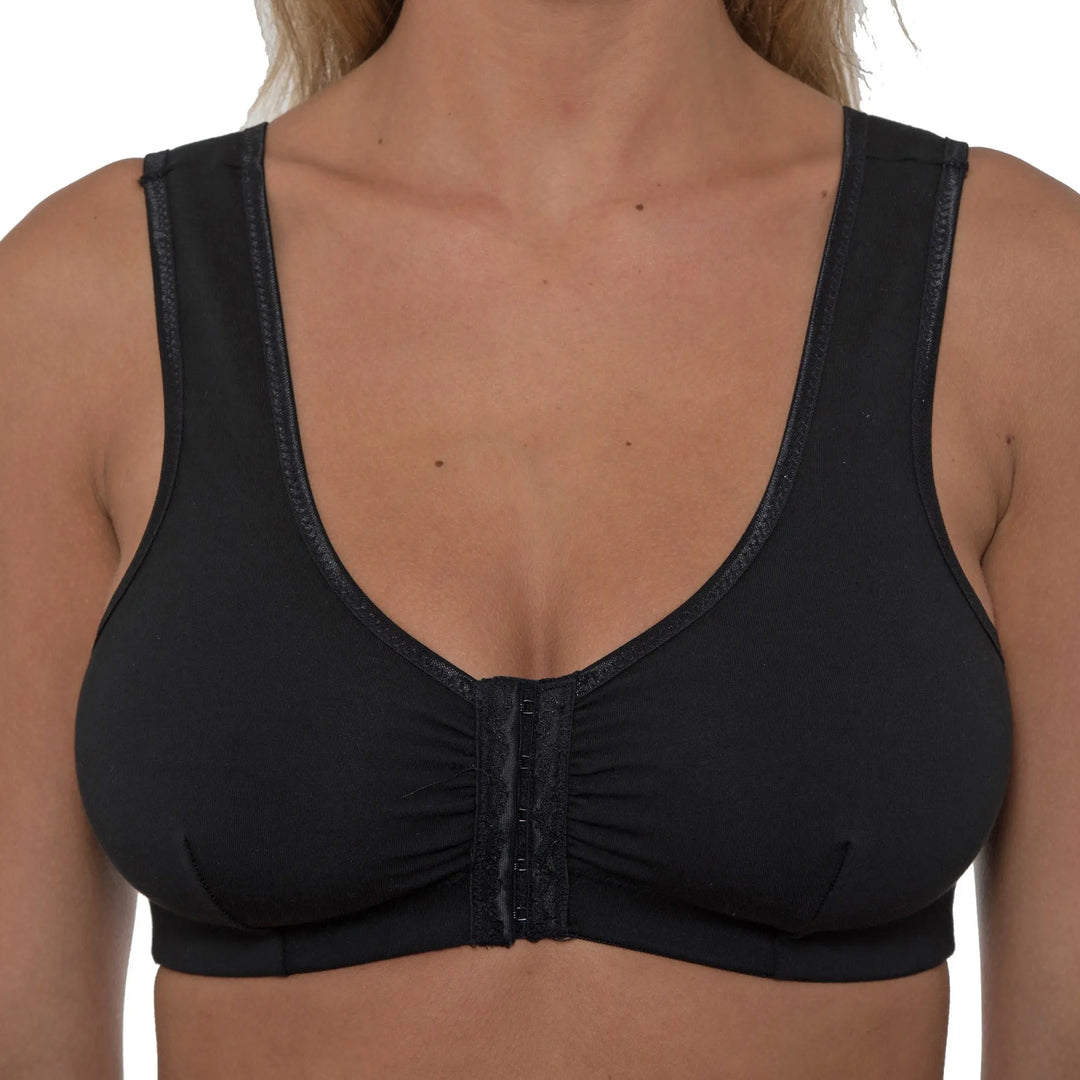
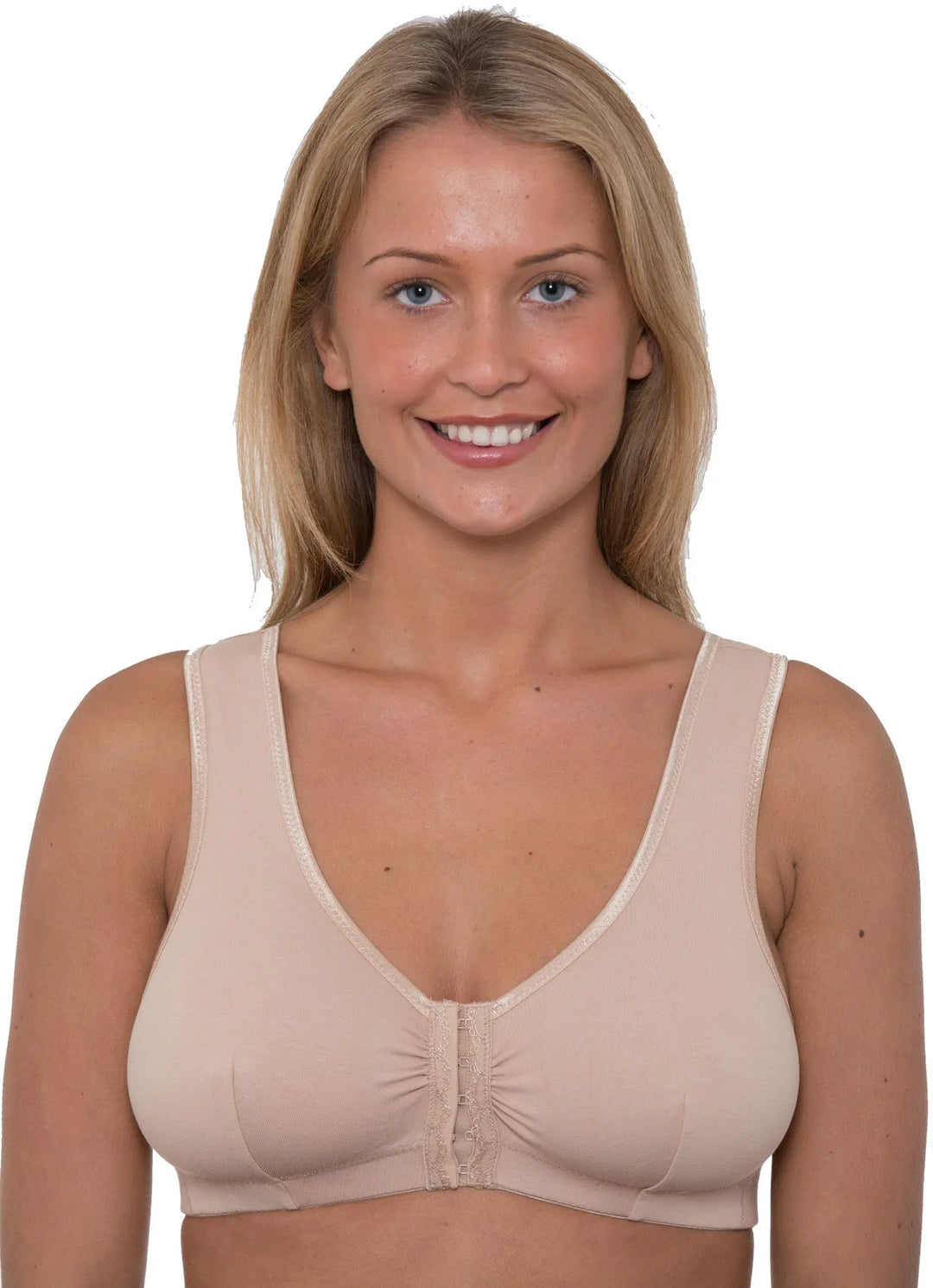
- Front fastening is essential — reaching behind your back to fasten a bra is not possible in early recovery
- High cotton content (90%+) reduces the risk of irritation at incision sites
- A vest or crop-bra style with soft, wide underbanding may be more comfortable than a structured bra at this stage
- Wait until your surgical team confirms you can introduce structured support before moving to a more fitted style
Most surgeons suggest waiting until drains are removed and swelling has settled before introducing pocketed styles with breast forms. This typically means three to six weeks post-surgery, but varies significantly — always follow your surgical team's advice.
Measuring for a Bra After Bilateral Mastectomy
Your band size may have shifted after surgery, particularly if you had reconstruction at the same time, or if post-operative swelling has taken time to settle. Measure fresh rather than relying on your pre-surgery size:
- Measure around your ribcage directly beneath where your bust was, keeping the tape level all the way round
- This gives your band size — the number in your bra size
- For cup depth, your breast care nurse or a specialist fitter can advise based on the size of forms you've been fitted with, or you can start with your previous cup size and adjust from there
Many women find their band size stays the same but their cup size changes after bilateral mastectomy, particularly if reconstruction involves implants of a different volume than the original breast tissue. If you've had no reconstruction, the cup in a pocketed bra should be sized to the breast form you'll be wearing — your breast care nurse can help you get fitted for forms.
Longer-Term: What Changes Over Time
In the months and years after bilateral mastectomy, most women develop strong preferences around comfort that are different from their pre-surgery bra wardrobe. Common shifts include:
- Preference for wire-free styles long-term, even once reconstruction is complete
- Preference for front fastening for convenience, which becomes habit rather than necessity
- Greater focus on strap width and back construction as the main source of comfort variation between styles
- Interest in styles that accommodate going without forms on days when that feels more comfortable — a pocketed bra worn without forms should not gape or look obviously empty
What We Stock for Bilateral Mastectomy
All bras in our mastectomy collection have bilateral pockets — suitable for both unilateral and bilateral mastectomy. They are non-wired, front-fastening, and made from a 90% cotton, 10% elastane blend with a smooth seamless inner lining.
Band sizes run from 34 to 48 — important if your body shape has changed, or if you had a larger frame to begin with and are finding most mastectomy ranges stop well short of your size.
Our cotton-lined mastectomy range is particularly suitable for women with ongoing skin sensitivity at scar sites or radiotherapy areas — the cotton lining minimises friction and moisture against the chest wall.
Frequently Asked Questions
Do I need a special bra after bilateral mastectomy?
Yes — a standard bra doesn't account for bilateral prosthesis pockets, chest wall sensitivity or the changed weight distribution after bilateral mastectomy. A proper bilateral mastectomy bra has pocketed cups on both sides, non-wired construction and a soft inner lining that's comfortable directly against the chest wall.
What's the difference between a unilateral and bilateral mastectomy bra?
A unilateral mastectomy bra typically has a pocket on one side only, or asymmetric cup construction to support a prosthesis on the surgery side while accommodating natural breast tissue on the other. A bilateral mastectomy bra has pockets on both sides and symmetrical cup construction. After bilateral mastectomy you need a bilateral style — always check the product description confirms dual or both-side pockets.
Can I wear a bilateral mastectomy bra without breast forms?
Yes. Many women wear pocketed mastectomy bras without forms, particularly at home. A well-designed pocketed cup sits flat and doesn't gape when worn without a form inside. This is worth checking specifically when buying — not all pocketed cups are designed to look tidy without a form in place.
How do I know what cup size to buy after bilateral mastectomy?
If you're wearing breast forms, your breast care nurse will typically guide you on form sizing, which then guides your cup size. If you're not wearing forms, start with your previous cup size as a reference and adjust based on fit — the cup should not gape or overflow. Many women find they settle into a slightly different cup size after bilateral mastectomy than they wore before surgery.


