
What to Wear After a Mastectomy: Your First Bra and Every Stage of Recovery
After a mastectomy, standing in front of your wardrobe can feel unexpectedly overwhelming. Everything you knew about getting dressed, how a bra should sit, which tops felt comfortable, what worked with what, has shifted. And if you have a fuller bust or a larger frame, it can feel harder still: most post-mastectomy advice assumes a small-to-average cup size, and many specialist ranges simply don't go high enough.
This guide is for you. Whether you've had a single or bilateral mastectomy, whether you're still in early recovery or months down the line, we'll walk through what to wear at each stage, how to choose your first mastectomy bra, and how to dress with confidence.
In short: for the first one to two weeks, wear the soft surgical or compression bra your hospital gives you. Once swelling has settled and your team is happy, usually somewhere between two and six weeks, move into a soft, wire-free, front-fastening post-surgery bra. When your wounds have fully healed, choose an everyday mastectomy bra with pockets for a breast form, a wide soft band and wide straps. Always follow your surgeon or breast care nurse on timing.
Recovery in three stages
Nobody hands you a timeline, and the bra that is right for one stage is often wrong for the next. Recovery generally moves through three stages.
Stage one: the surgical or compression bra (first one to two weeks)
In the first days and weeks, the job of your bra is compression and stillness: keeping swelling down and holding dressings or drains in place, not shaping or everyday support. This is usually the bra you are sent home in. It is front-fastening, seam-free and deliberately snug, and it is not meant for long-term wear.
For clothing, soft jersey fabrics such as cotton or modal are your best friend. They don't irritate healing skin and they stretch easily, so you're not fighting to get dressed. Front-opening tops, zip-up hoodies and button-through shirts mean you don't have to lift your arms over your head while movement is limited.
Stage two: your first post-surgery bra (roughly two to six weeks)
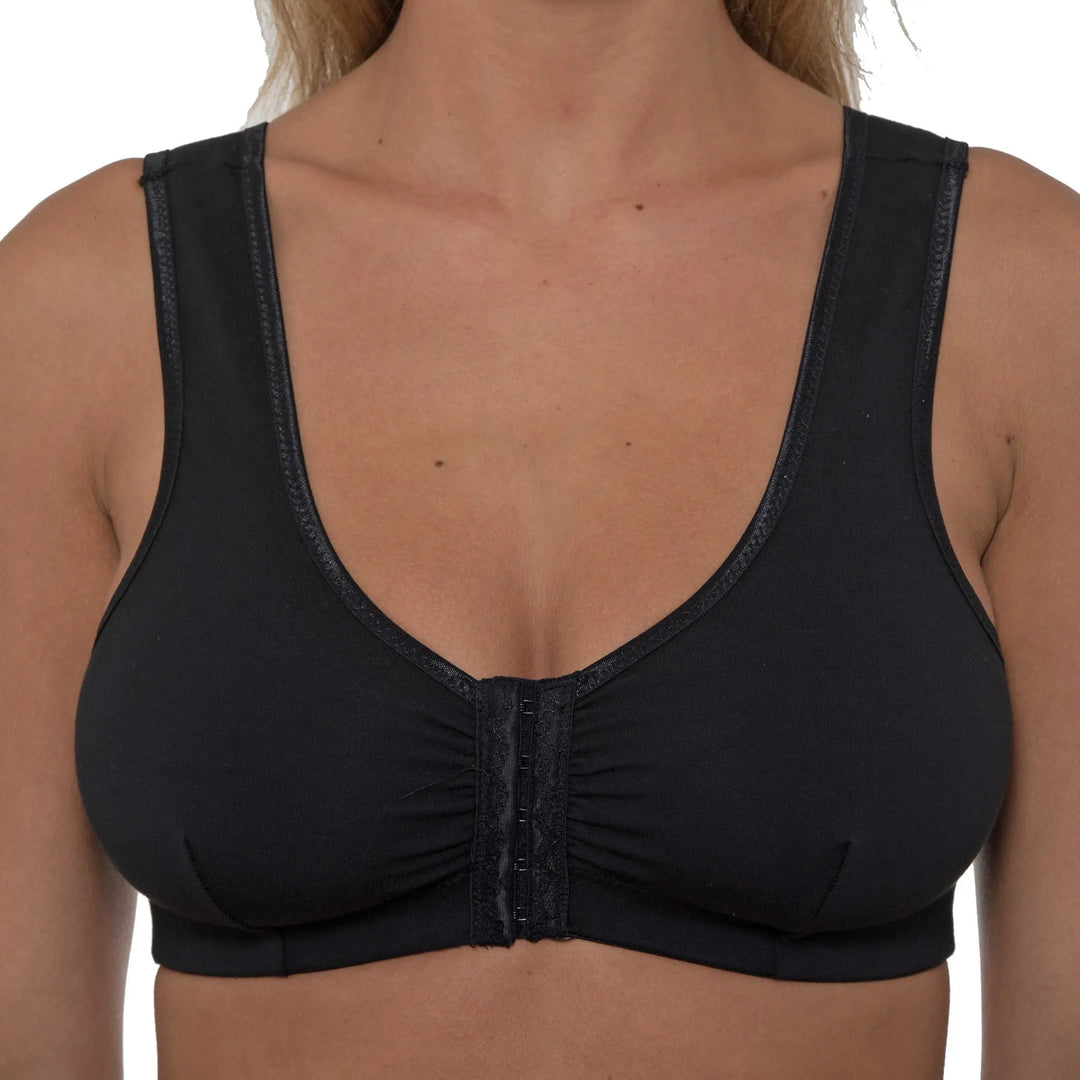
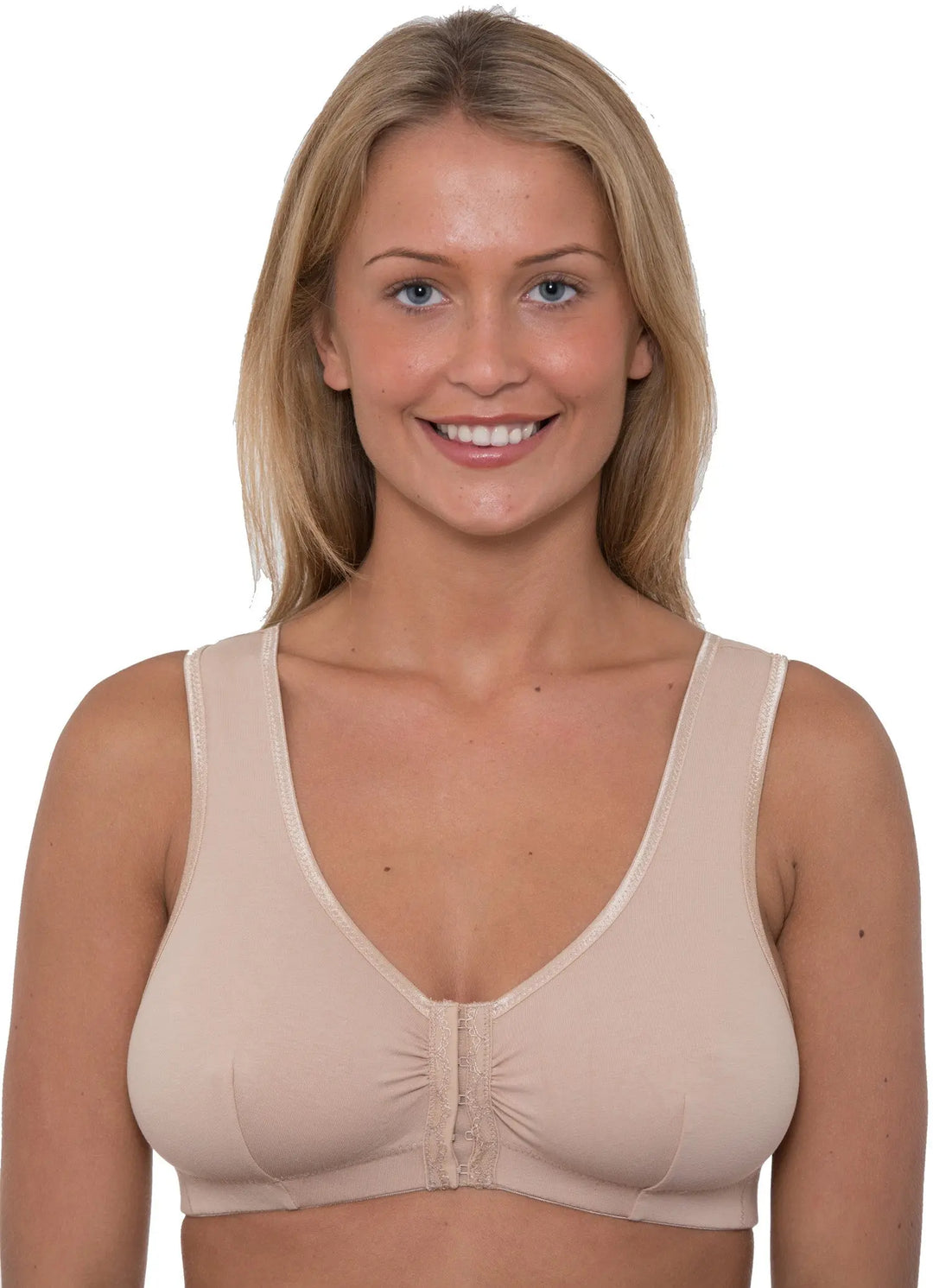
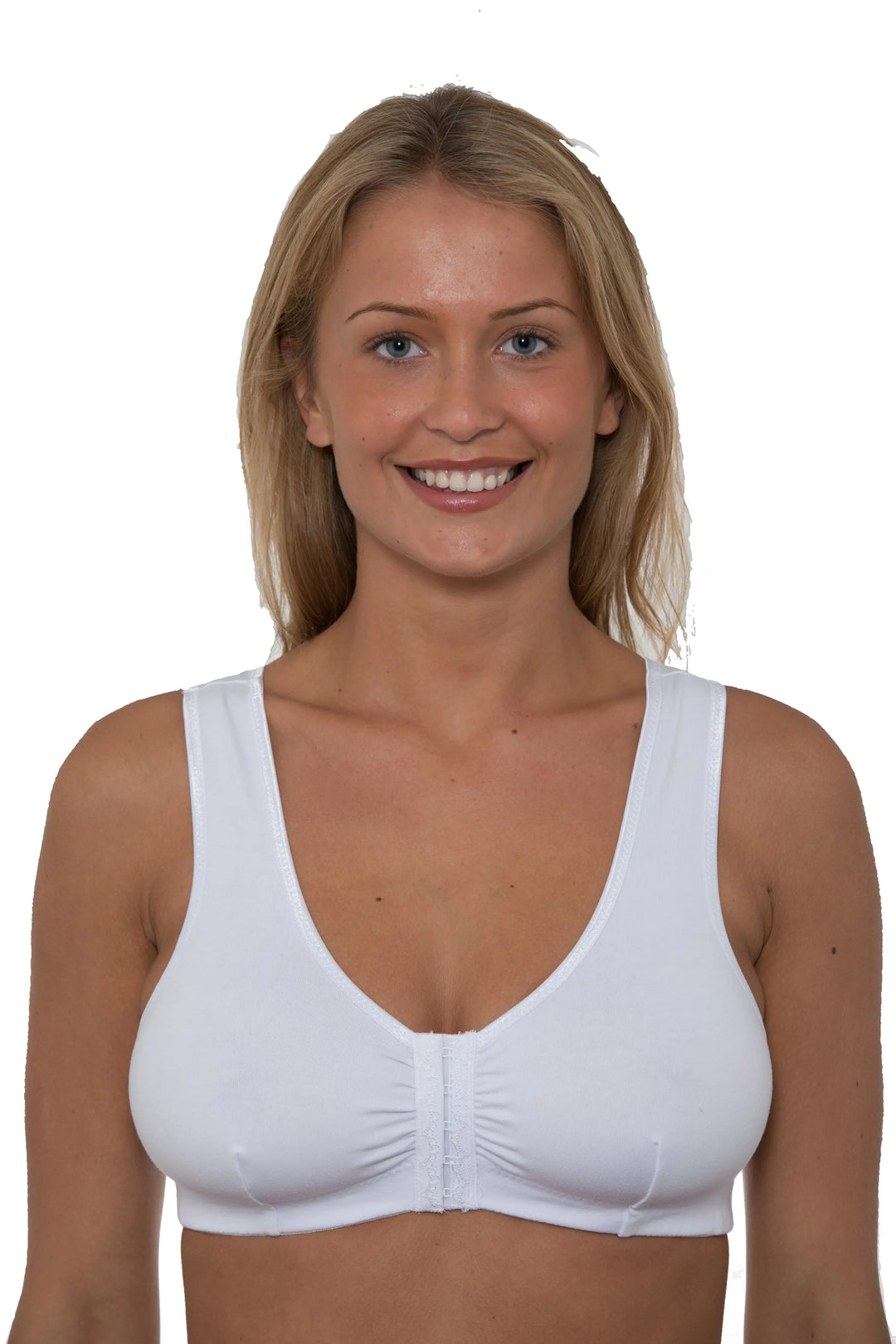
Once swelling has gone down and your team is happy, the compression bra can start to feel too tight, but the incision is still healing and an underwired bra is still off the table. This is when most women buy their first post-surgery bra. Look for:
- Front fastening, so you can dress without reaching behind your back.
- No wire and no seams pressing on the scar or under the arm.
- Soft, breathable, cotton-rich fabric against healing skin and any radiotherapy area.
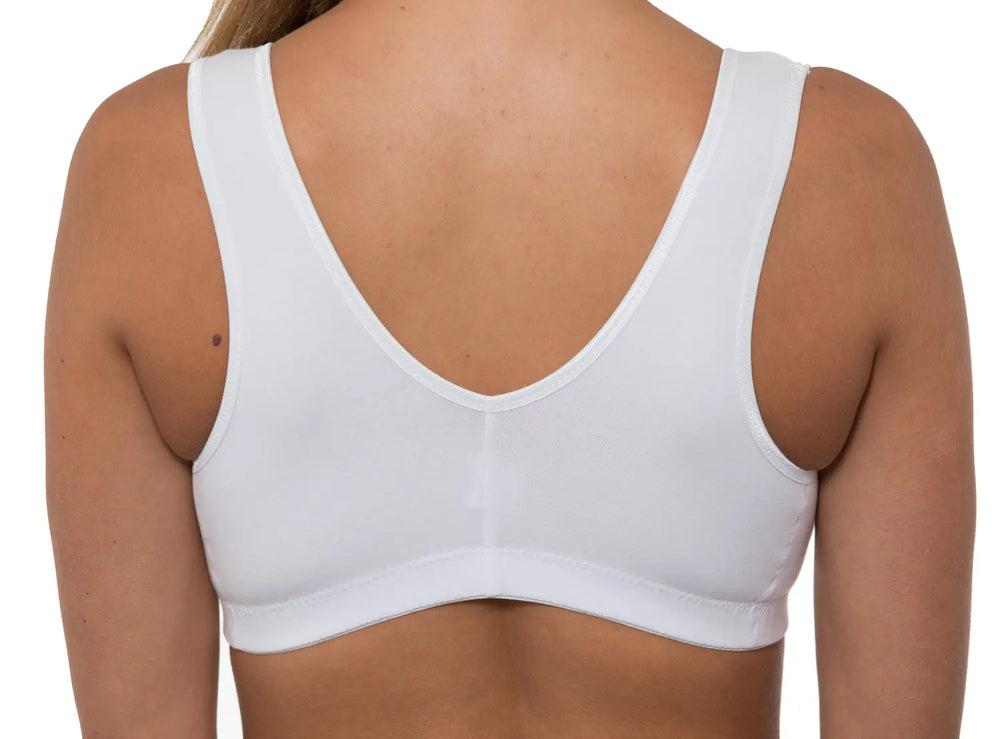
- A deep, soft underband and side wings that support without pressing on scar tissue.
- Pockets if you want to wear a lightweight soft form (a "softie") as you heal.
Wearing the stage one compression bra too long into this period usually just means unnecessary tightness. Jumping straight to an underwired bra is the mistake worth being more careful about, because pressure on a healing incision can set recovery back.
Stage three: your everyday mastectomy bra (once fully healed)
Once your wounds have healed and your surgeon has given the go-ahead, you can think about a longer-term bra. This is where many fuller-busted women hit a wall: standard post-mastectomy bras on the high street often stop at an F or G cup.
At Orchid Fashion Boutique, our mastectomy bras are sized by band only, up to a 48, so there is no cup ceiling to work around. Our mastectomy bra collection includes styles with soft pockets in both cups, designed to hold a breast form or partial prosthesis securely on one or both sides.
What to look for in an everyday post-mastectomy bra:
- Pockets in both cups: flexibility whether you wear one form, two, or none.
- Wire-free construction: avoids pressure on scar tissue and the area under the arm. Many women stay wire-free for good.
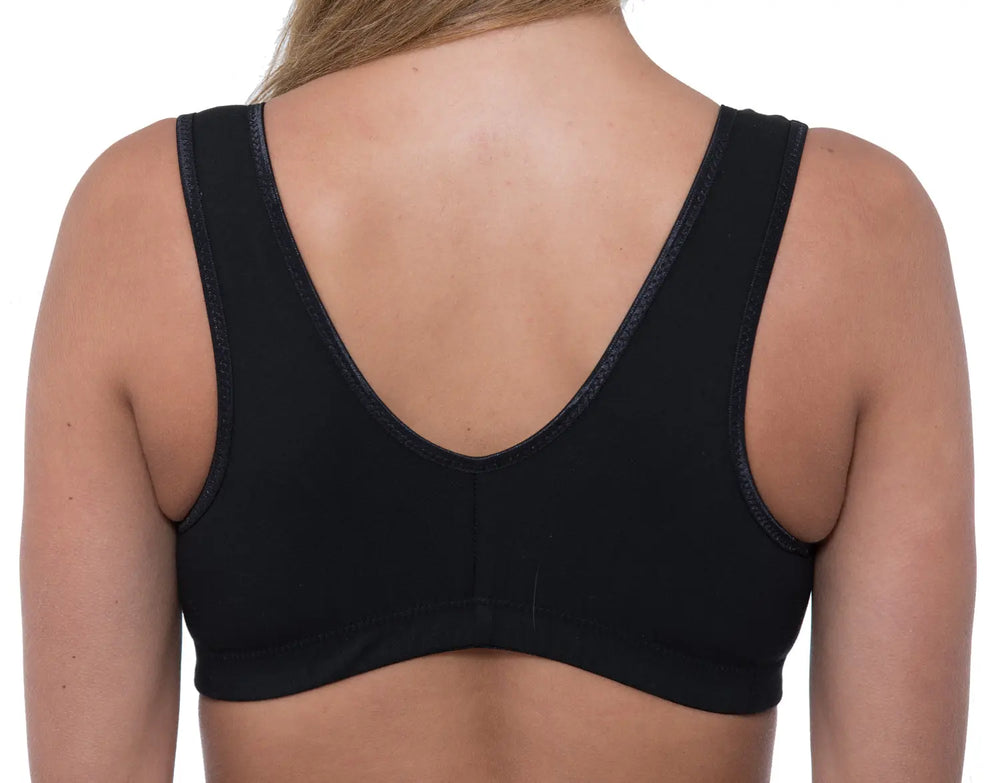
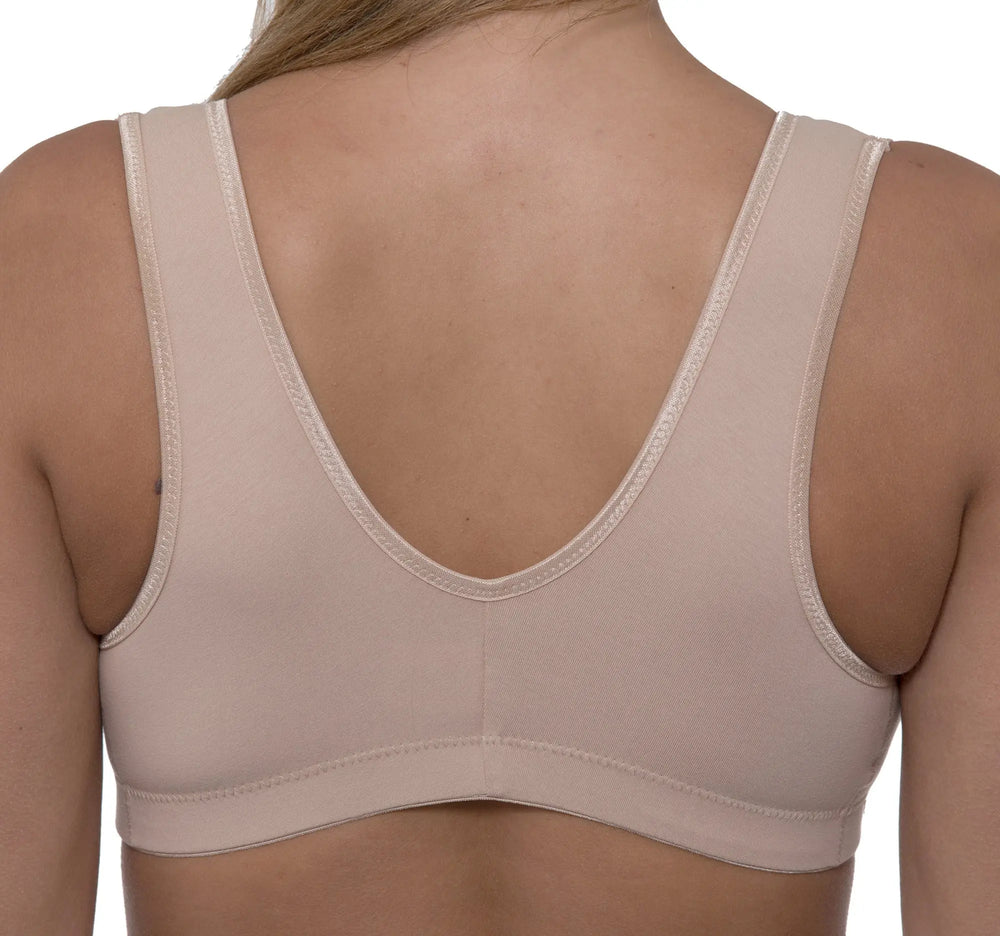
- Wide, padded straps: essential for a fuller bust, to spread the weight without cutting in.
- Front or back fastening: both work once you're healed, but front fastening stays easier for many women, particularly with lymphoedema or limited shoulder movement. See front-fastening bras after mastectomy.
- Full cup coverage: for a smooth, even shape under clothes.
Getting the fit right at home
Your size may have changed, so check your fit rather than relying on your pre-surgery size. Our step-by-step guide to measuring for a mastectomy bra walks you through it. When you try a bra on:
- Check the band. It should be snug and level, with room to slide two fingers underneath.
- Look at the centre front. It should sit flat against your breastbone.
- Check under your arms. The fabric should not cut into the area where lymph nodes may have been removed.
- Check the pockets. Your form should sit securely without shifting when you move or bend.
Many women find they need to go up a band size, particularly after reconstruction or when wearing a breast form for the first time. Our five signs your mastectomy bra doesn't fit covers the common problems.
Breast forms: do you need one?
This is a deeply personal decision and there is no right answer. Some women choose to wear a breast form, also called a prosthesis, to restore their shape under clothes. Others prefer not to, and are comfortable in a pocketed bra without a form, or without a bra at all.
Silicone breast forms look and feel the most natural. They are weighted, which helps clothes hang naturally and can help balance the body. They need a pocketed bra to sit correctly, and heavier forms can feel warm in summer. At larger cup sizes the weight is more noticeable, so some women prefer a lighter or partial form.
Soft breast forms (softies) are lightweight and fibre-filled. They are cool to wear and often recommended early in recovery when the chest is still sensitive.
Read our full comparison of soft and silicone breast forms. After a bilateral mastectomy, a bra with pockets on both sides and forms of equal weight can help with posture and comfort through the day.
Dressing with confidence
Fabrics and fit
Stick to fabrics with some natural give, such as jersey, modal, cotton stretch and bamboo. They move with your body and feel kinder against skin that may still be sensitive or changed by radiotherapy. See our guide to bras to wear during radiotherapy.
Necklines
V-necks and wrap styles work well with a fuller bust. On days you don't wear a form, higher necklines, layers, draping and ruching all add shape and texture.
Swimming and exercise
There are good mastectomy swimwear options with built-in pockets for forms. When you're ready to exercise again, a supportive sports bra is key, especially with a fuller bust. See sports bras after a mastectomy.
Layering
Lightweight camisoles under tops and dresses give an extra layer of coverage and confidence, especially in the early months.
A note on large cup sizes
If you wore a G, H, J cup or above before your mastectomy, you'll know that finding the right bra always took more effort, and most specialist mastectomy ranges stop at an F or G cup. Because our mastectomy bras are sized by band only, up to a 48, there is no cup limit to run into. Our guide to mastectomy bras for large cup sizes goes into more detail.
More guides for your situation
- Bilateral mastectomy bras: what to look for and how to get the right fit
- Lumpectomy bras vs mastectomy bras: what's the difference?
- Mastectomy bras with pockets
- Non-wired vs wired mastectomy bras
- Cotton-lined mastectomy bras: why fabric matters
- Post-op bras after any surgery
Frequently asked questions
When should I buy my first mastectomy bra?
Most women buy their first post-surgery bra once swelling has settled and their drains are out, usually somewhere between two and six weeks after surgery. Your breast care nurse or surgeon will tell you when you're ready.
How soon after a mastectomy can I wear a regular bra?
Most surgeons recommend waiting until your wounds have fully healed, typically four to six weeks or more, though this varies. A wire-free mastectomy bra is usually the first step before considering underwired styles.
Do mastectomy bras have wires?
Most don't. Wire-free styles avoid pressure on scar tissue and under the arm, and many women stay wire-free long after recovery.
Do I need to wear a breast form all the time?
Not at all. Many women wear one during the day and go without at home, and others never wear one. It is entirely your choice.
Will my bra size change after a mastectomy?
It can. With a breast form your fit may stay similar, though your band may need adjusting. After reconstruction, a fresh fitting is strongly recommended.
Can I get a mastectomy bra on the NHS?
You may be able to get mastectomy bras and breast forms through your breast care team. What is available varies by area, and many women add to their NHS bras with ones bought privately.
At Orchid Fashion Boutique, we've been fitting fuller busts since 2011. We offer free UK delivery in discreet packaging. Browse our mastectomy bra collection, or get in touch if you'd like personal help with sizing and style.


